What is Propolis?
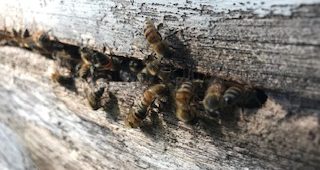
Honeybees gather propolis, a resin, from tree bark and leaves. They combine this resin with nectar, creating a mix of wax, pollen and bee bread. They then use this substance to seal their hives, protecting it from outside contaminants. They also use propolis at the entrance to the hive to sterilize themselves as they come and go.
PROPOLIS is a very complex mixture that varies according to source it comes from. Propolis is a mixture of resin ,essential oils and waxes mix with bee glue.Propolis contains amino acid,minerals, ethanol,vitamin A, B complex,E,and a highly active ingredient know as flavonoids or bioflavonoids. Propolis offers antiseptic ,antibiotic,anti-fungal and even antiviral properties. with its antiseptic properties its provides a hospital clean environment for the rearing of blood. Propolis works against bacteria in several ways. One study reported that it prevented bacterial cell division and also broke down bacterial walls and cytoplasm, which is how some prescription antibiotics work. As a antibiotic propolis helps the hive block out viruses, bacteria, and other organisms.
There is evidence that propolis has some broad antimicrobial activity and that it may have anti-inflammatory effects that could make it useful in the treatment of some forms of arthritis, among other disorders. There is also some evidence of anti-cancer activity. (research in Brazil Posted by ropbiyang under ilmiah, khasiat
Treat minor burns with bee propolis. Studies conducted at the University of Texas School of Medicine revealed that is more effective than treatment with silver sulfadiazene. Burns treated with bee propolis showed less inflammation and a reduced healing time. For this type of treatment a 5 percent propolis ointment is recommended.
Examine the content of bee propolis carefully as the composition of propolis products can vary widely. Typically it is comprised of 60 percent resins, 20 percent beeswax, 10 percent essential oils, 5 percent pollen and 5 percent organic or mineral substances. Propolis is available as a liquid extract as well as capsule and tablet forms. Select a supplement that does not contain fillers such as sugar, starch, gluten or any artificial flavors or colorings
Ancient Healer
While propolis is just now enjoying a rediscovery, its usefulness can be traced back to the time of Hippocrates, who used it to heal sores and ulcers, internally and externally. Through the ages historical documents record its use. Culpepper’s Complete Herbal refers to ointments of Propolis for inflammation and fever. In WWII, it was used by the Soviet Union to treat battle wounds. Proppolis is an excellent natural antibiotic and immune system booster.
Nature’s Penicillin
Synthetic antibiotics carry with them side effects – propolis, a natural antibiotic, has no such side effects. Propolis has also been shown to fight bacterial strains that have become resistant to synthetic antibiotics.
Benefits of Propolis
Although few clinical trials have tested the health effects of propolis, there’s some evidence that propolis may offer certain benefits. Here’s a look at several key findings from the available studies:
1) Cold Sores
Preliminary research suggests that topically applying propolis may help heal cold sores. In a study published in Phytotherapy Research in 2010, for example, scientists found that extracts of propolis possess virus-fighting effects that may help knock out against herpes simplex virus type 1 (the virus that causes cold sores).
2) Genital Herpes
Applying a propolis-based ointment may help treat sores related to genital herpes, according to a study published in Phytomedicine in 2000. For the 10-day study, 90 men and women with genital herpes used an ointment containing flavonoids sourced from propolis, an ointment containing acyclovir (a drug used to reduce pain and speed healing of herpes-related sores), or a placebo ointment.
By the study’s end, 24 out of the 30 participants in the propolis group had healed (compared to 14 out of 30 in the acyclovir group and 12 out of 30 in the placebo group). Given this finding, the study’s authors concluded that an ointment containing flavonoids sourced from propolis may be more effective than both acyclovir and placebo ointments in healing sores related to genital herpes.
3) Burns
Propolis may promote the healing of minor burns, according to a 2002 study from the Journal of Alternative and Complementary Medicine. For the study, researchers compared the effects of a propolis-based skin cream with those of silver sulfadiazene (a drug commonly used in treatment of second- and third-degree burns) in patients with second-degree burns. Study results showed that propolis and silver sulfadiazene were similarly effective in treatment of burns. What’s more, propolis appeared to offer greater anti-inflammatory benefits than silver sulfadiazene did.
4) Cavities
Propolis may help fight cavities, a 2003 study from Biological & Pharmaceutical Bulletin shows. In laboratory research, scientists found that compounds found in propolis helped inhibit the growth of mutans streptococci (an oral bacteria known to contribute to the development of cavities). The study suggests that propolis may also help stop mutans streptococci from sticking to the teeth.
5) Diabetes
Findings from animal-based research indicate that propolis may aid in the treatment of diabetes. In a 2005 study published in Pharmological Research, for example, tests on diabetic rats revealed that treatment with propolis helped lower blood sugar levels and reduce cholesterol.
 GDF Clarke's Bee Farm, changing the way you see the Bee
This propolis ointment works wonders i got a wasp bite and in minutes the pain gone also i have athlete foot and i can testify it helps to remedy it this is a product every household should have
For the past 4 days I have been using the hot oil hair treatment to rub my swollen, very painful and inflamed knee. The pain has subsided and inflammation is very mild. The knee was paining so badly that one night I just decided to use what ever I could find to rub..the nearest thing was the hoy oil treatment that I have been using in my hair..